Home / Symptom guides / Skin changes
THE HERSCRIPTS GUIDE / SKIN CHANGES
Skin changes.
Your usual routine. Suddenly different skin.
When dryness, sensitivity, or texture changes leave your usual products feeling wrong, start with what has changed. Learn what to note and which marks need assessment before treatment.
Prepared by HerScripts Editorial
Updated October 24, 2026 · Clinical review pending
A COMMON QUESTION
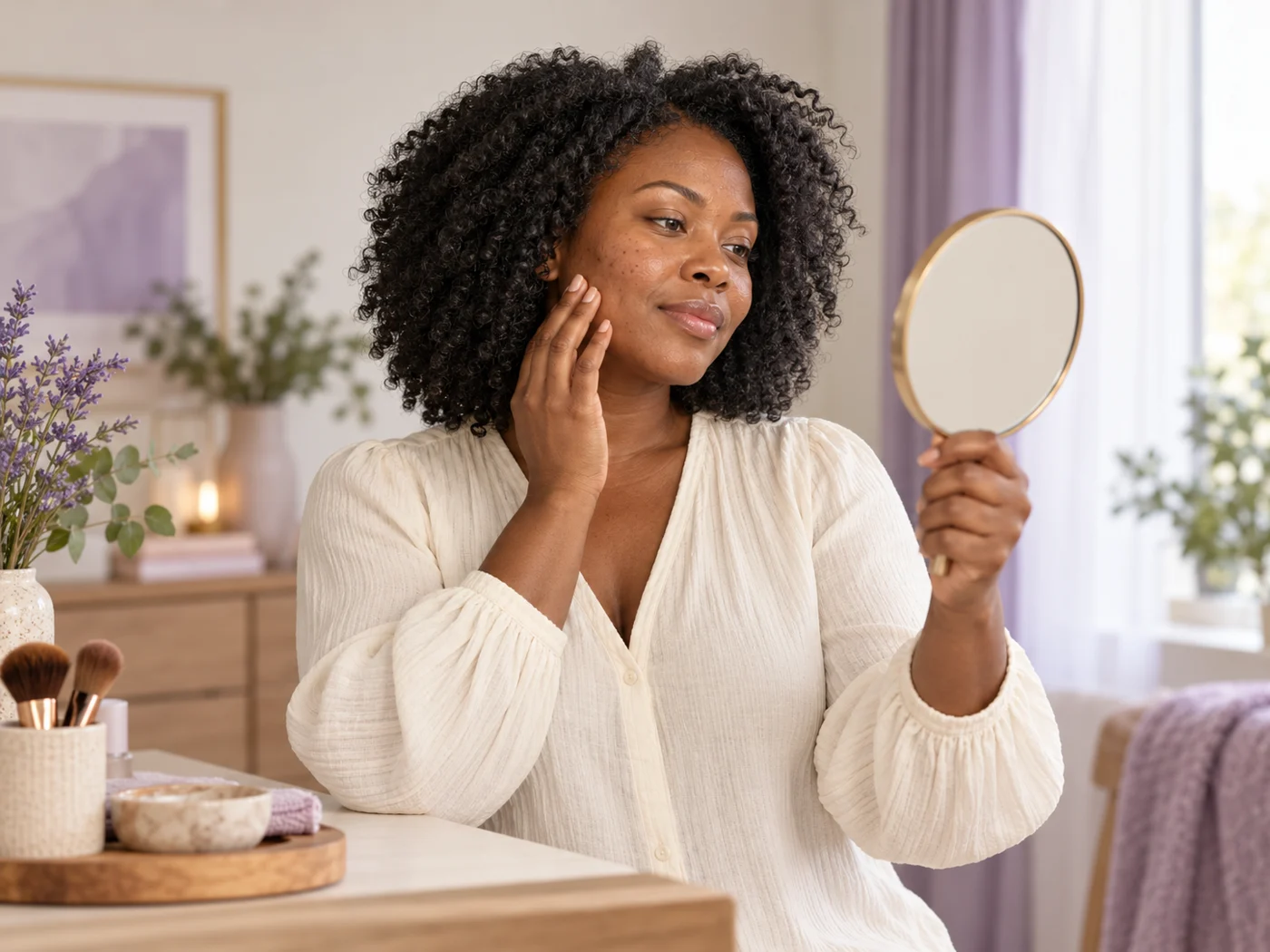
Why does my skin feel different at midlife?
POSSIBLE CONTRIBUTORS
One symptom.
More than one possible cause.
01
Dryness and sensitivity
Skin can become more easily irritated during midlife.
02
Sun-related changes
Pigment changes or new spots may need an examination.
03
Products and routines
Fragrance or harsh products can aggravate dry skin.
04
Differences in appearance
Dryness and discoloration may look different across skin tones.
YOUR NEXT STEP
Start with your story.
Find your next step.
Before your appointment
- Where the change appears and when it started
- Clear photos without filters, if appropriate
- Products, active ingredients, and recent treatments
- Changes in color, size, texture, or bleeding
- Your skin tone, sensitivities, and previous diagnoses
A MORE PERSONAL CONVERSATION
What might an assessment involve?
A CONSIDERED NEXT STEP
What can I discuss next?
WHEN TO SEEK CARE
Some changes need a closer look.
Arrange an assessment for a new, changing, bleeding, or nonhealing spot, or persistent skin symptoms. Do not try to fade an unexplained mark before it has been checked. Rapidly worsening or severe symptoms need prompt medical advice.
YOUR QUESTIONS
Your questions. Clear answers.
Can menopause change my skin?
Yes. Dryness and changes in skin thickness or texture may occur. Other factors and skin conditions can also contribute, so individual assessment still matters.
Does dry skin look the same on every skin tone?
No. Flaking and discoloration can be more noticeable on darker skin. Care and assessment should account for how symptoms look on your skin.
Should I treat a new dark spot as an age spot?
Have an unexplained or changing spot assessed first. Some concerning lesions can resemble ordinary pigment changes.
Can online photos diagnose every skin condition?
No. Photos can help a clinician evaluate a concern, but an in-person examination, dermoscopy, or a biopsy may still be needed.
LOOK AT THE WHOLE PICTURE
Noticing more than one change?
Turn what you have noticed
into questions you can ask.
PATIENT CHECK-IN
Coming soon.
Want to understand how care could work? Explore the planned care options and the assessment steps through HerScripts. Enrollment is not open; services, eligibility, availability, and costs will be confirmed before launch.
Sources and editorial notes
This guide provides general education, not a diagnosis or an individual treatment recommendation. It has not yet been reviewed by a HerScripts clinician. The organizations linked above are information sources, not partners or endorsers of HerScripts.